Augmented Reality & Virtual Reality Services

Augmented Reality & Virtual Reality Services

Together, AR and VR technology is transforming the way we visualize data, make decisions, and engage with content as part of comprehensive Design Visualization services. From gaming and healthcare to construction and education, the adoption of AR & VR services is redefining the standards of innovation, communication, and user experience.

Augmented Reality & Virtual Reality Services

In today’s fast-paced digital world, Augmented Reality (AR) and Virtual Reality (VR) have evolved from futuristic concepts into practical tools reshaping industries across the globe. These immersive technologies allow users to experience and interact with digital environments in real time, blurring the lines between physical and virtual worlds. Augmented Reality enhances the real world by overlaying digital content—such as images, 3D models, or information—on a user's view of their surroundings, typically through smartphones, tablets, or AR glasses. On the other hand, Virtual Reality creates entirely simulated environments that users can explore using VR headsets and controllers.

Our AR & VR Services

Custom AR Applications

Interactive mobile AR apps for real estate, product marketing, and facility management.

VR Simulation Development

Full-environment experiences for architectural walkthroughs, training, and presentations

Integration with BIM

Convert BIM models into VR and AR experiences for better coordination and client communication.

360-Degree Tours and Immersive Environments

Matterport-style virtual tours for sales, remote collaboration, and inspections.

Revit VR Walkthroughs

Convert Revit BIM models into immersive VR experiences using tools like Enscape and Twinmotion.

AR & VR Advantage for AEC

Businesses are embracing AR and VR to solve real-world challenges and improve workflows, customer engagement, and operational efficiency. These technologies offer a wide range of benefits:

Enhance User Experiences

Immersive experiences captivate users like no other medium. Whether it’s visualizing products in 3D, exploring architectural spaces before construction, or training staff in life-like simulations, AR and VR enhance user engagement and satisfaction.

Simplify Complex Interactions

Through interactive 3D visualizations, companies can simplify complex products, services, or workflows. A single AR app can replace thick product manuals, while VR simulations can walk users through intricate procedures or scenarios.

Realistic Visualizations for Design and Marketing

Architects, interior designers, real estate professionals, and marketers benefit immensely from real-time 3D walkthroughs, AR-enhanced brochures, and virtual tours. These visuals help decision-makers and clients understand spaces, aesthetics, and functionality before committing to a project.

Improve Productivity and Reduce Costs

By identifying issues early through simulation and virtual prototyping, businesses reduce rework, avoid costly delays, and enhance efficiency. Especially in construction, AR and VR solutions integrated with BIM significantly improve project delivery.

Industry Applications of AR & VR

AR and VR in Gaming and Entertainment

One of the earliest adopters of immersive technology, the gaming and entertainment industry continues to push the boundaries of AR and VR.

  • VR gaming consoles and AR mobile apps create engaging, interactive experiences that offer players a deeper level of immersion.
  • Location-based AR games like Pokémon Go and VR escape rooms redefine how audiences experience play.
  • In film and media, VR cinema and 360-degree content are enabling users to become active participants rather than passive viewers.
AR and VR in Healthcare

AR and VR in the healthcare industry are revolutionizing how professionals train, diagnose, and treat patients.

  • VR simulations provide medical students with immersive training for surgeries, anatomy, and patient care, improving skills without risking real lives.
  • AR-assisted surgery enhances precision by overlaying critical data on real-time visuals during procedures.
  • In patient therapy, VR helps treat phobias, PTSD, and anxiety through controlled, immersive scenarios.
  • Rehabilitation and physical therapy programs use gamified VR systems to improve recovery outcomes.

Architecture and Design

In the AEC industry, the use of VR and AR for architectural visualization has become a game-changer. By integrating these tools with Building Information Modeling (BIM) platforms like Revit, firms create highly accurate and interactive design experiences.

  • AR walkthroughs allow clients to explore yet-to-be-built interiors and exteriors on-site through mobile devices or smart glasses.
  • VR experiences let stakeholders immerse themselves in full-scale 3D models, improving feedback and design approvals.
  • Interior design and space planning benefit from 3D interaction, giving clients the power to customize layouts and materials in real time.
3D Exterior Rendering Services

Quality Assurance and Delivery

Delivering high-quality 3D renderings for interior designers and architects requires careful review and multiple iterations.

  • High-Resolution Output: Ensuring ultra-HD images for print, presentations, and digital use.
  • Client Revisions & Feedback: Incorporating feedback at different stages to meet expectations.
  • Optimized Rendering Time: Using powerful rendering farms to speed up the production process.

Our QA/QC Process

  • Establish Standards
  • Implement Project Specific Standards
  • 3-level Review – Self, Peer, Supervisory
  • Repeated For Every Design Review Cycle
  • Review Before Final Submission

Our QA/QC Checklist

  • Design Scope Checklist
  • Production Checklist
  • Design Coordination Checklist
  • Quality Review Checklist
  • Delivery Checklist

Quality Compliance

Our steadfast commitment to quality forms the foundation of our operational excellence. We meticulously follow industry-standard practices, stay updated with evolving regulations, and implement stringent quality control measures at every step of our workflow. By adhering to internationally recognized quality standards, we ensure that our deliverables meet the highest benchmarks of quality and accuracy.

International Quality Management System

The AEC Associates takes pride in implementing a robust International Quality Management System, seamlessly integrated with Building Information Modeling (BIM) to ensure efficiency, consistency, and continuous improvement across all operations. By leveraging BIM at every stage, from Schematic Design (SD) and Design Development (DD) to Construction Documentation (CD), we deliver data-rich, clash-coordinated models and documentation that meet the highest quality standards.

Our systematic approach ensures precise project execution, beginning from initiation to final delivery. Through BIM-enabled workflows, we enhance collaboration, reduce errors, and improve decision-making. Regular internal audits, a rigorous 3-level quality check/review system, performance evaluations, and corrective actions further refine our processes, ensuring flawless results.

Why Choose The AEC Associates

We are more than just a service provider—we are your digital transformation partner in the AEC space and beyond.

  • Deep Industry Knowledge: Our experience in Building Information Modeling (BIM) and Architectural CAD/BIM Documentation Services allows us to deliver results that are accurate and tailored to real-world needs.
  • State-of-the-Art Tools: We work with top platforms like Unity, Unreal Engine, Enscape, Autodesk Revit, and Matterport.
  • Customized Solutions: Whether it’s a high-rise construction VR tour or an AR app for furniture configuration, we craft solutions that fit your goals.
  • Seamless Integration: We ensure AR & VR solutions align perfectly with your existing workflows and design processes.
  • Client-Centric Approach: Your satisfaction is our priority—we value transparency, responsiveness, and creative excellence.
3d rendering cinema building e1732703838666

AR and VR in Manufacturing

In manufacturing, AR and VR services improve productivity, safety, and quality by integrating virtual environments into everyday operations.

  • Virtual prototyping allows engineers to test and tweak designs before production begins.
  • AR-enabled maintenance and inspection reduce downtime by guiding technicians through step-by-step instructions in real time.
  • Employee training becomes more effective with VR simulations, particularly for hazardous or complex tasks.
  • Production planning and layout optimization can be visualized and adjusted virtually, minimizing expensive on-site errors.

AR and VR in Education

The integration of AR and VR in education is transforming traditional classrooms into immersive, interactive learning environments.

  • Virtual classrooms and immersive learning experiences keep students engaged, even in remote settings.
  • Historical recreations, virtual science labs, and field trips through VR make learning exciting and impactful.
  • AR content brings textbooks to life—students can scan a page and see a 3D model or animation appear, making abstract concepts tangible.
  • Vocational training programs benefit from life-like simulations that replicate real-world tasks and machinery.

Voice of Customers

Slider
Image 1

"We are submitting at 100%, and want to thank you and your team for the great work, it was a pleasure working with you. Very pleased with the outcome."

Project Manager, Leading Architectural Firm in Norfolk, VA
Image 2

“Exceptional service. I found The AEC Associates to be very responsible firm worth trusting. Top service which helped us meet our tight deadlines.”

Principal, Architectural firm in the Bay Area, CA
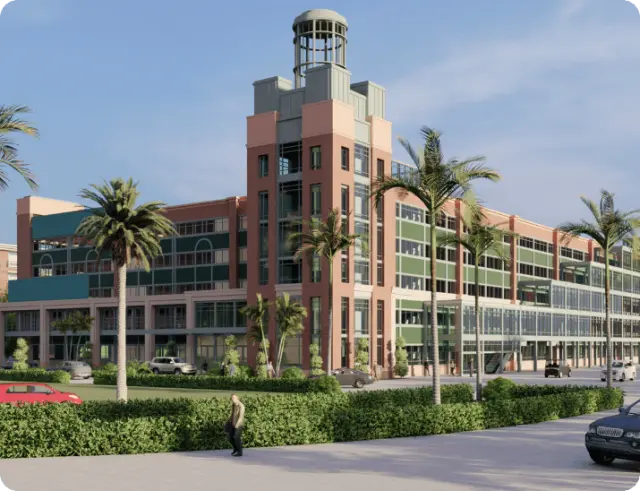
Image 2

“Our Project team is very pleased with the final documents for the project. Given the condition of the backgrounds we provided you guys did a great job.”

Project Manager, Leading Architectural Firm in Columbus

Image 2

“I can recommend The AEC Associates as a firm with an experienced and motivated team which is keen to delight their clients. They are fantastic to work with.”

Project Manager, Leading Construction Company in Phoenix, AZ

Accordion

FAQs

What is the difference between AR and VR?-

Augmented Reality (AR) overlays digital content onto the real world, while Virtual Reality (VR) immerses users in a fully virtual environment.

Can AR & VR be integrated with BIM?+

Yes. BIM models can be converted into interactive VR and AR experiences using tools like Enscape, Unity, and Unreal Engine.

How is AR/VR used in construction?+

These technologies aid in site visualization, remote inspections, design validation, safety training, and stakeholder communication.

Are AR and VR expensive to implement?+

Costs depend on complexity, but scalable solutions like mobile AR apps and lightweight VR models make adoption feasible for many businesses.

What industries benefit most from AR & VR?+

While AEC, healthcare, manufacturing, and education are leading adopters, virtually every industry can benefit from immersive technology.

Contact Us for Your BIM Conversion Needs

As BIM, AI, and immersive design converge, businesses that embrace AR and VR services will gain a competitive edge, deliver better outcomes, and delight stakeholders like never before. Whether you’re looking to enhance collaboration, improve design workflows, or offer next-level presentations, The AEC Associates’ AR & VR solutions provide the key to smarter innovation and immersive engagement. Contact us today!

Let's start a conversation!

AEC Header Popup Form